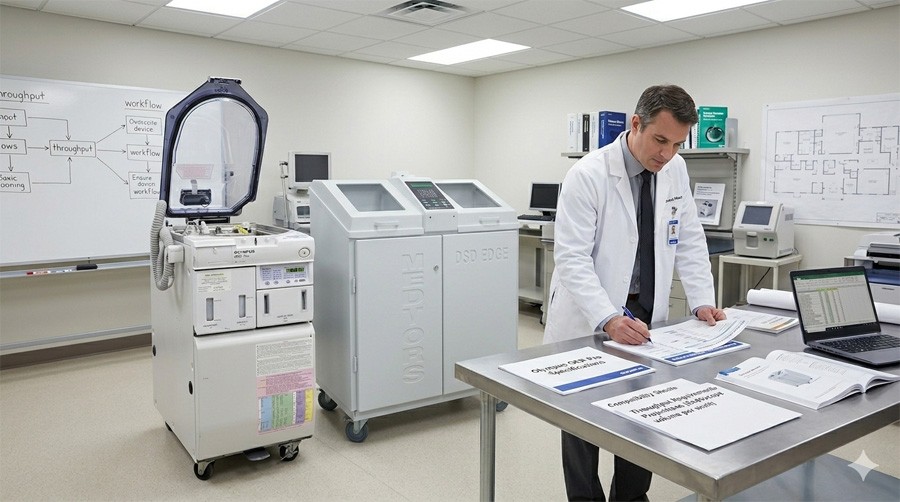
Every flexible endoscope cycle that moves through your endoscopy suite depends on one piece of equipment working flawlessly behind the scenes: the automated endoscope reprocessors. When an AER goes down, procedures back up, staff scramble, and patient safety risk climbs. This guide walks hospitals and ambulatory surgery centers through the endoscope reprocessing essentials—what these machines do, how to maintain them, and where to turn when something breaks.
What an Automated Endoscope Reprocessor Actually Does
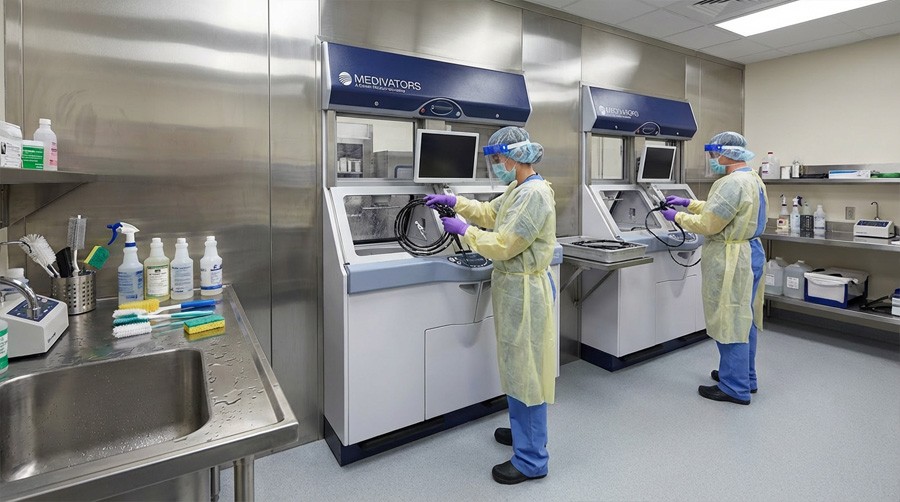
An AER is purpose-built to perform high level disinfection on flexible endoscopes after each procedure. The unit pushes liquid chemical high level disinfectants through every channel of the scope, rinses with filtered water, and finishes with forced-air drying. That standardized cycle replaces manual soak methods, cuts exposure to harsh chemicals for your staff, and creates automatic data logs for compliance audits. The effectiveness of a well-maintained AER directly supports endoscope reprocessing quality across every shift.
Most facility departments run Olympus, Medivators (Cantel), or similar AER platforms. Regardless of brand, every unit relies on the same core functions: wash, disinfect, rinse, dry, and document. Understanding that workflow helps your team catch problems early—before they affect reprocessing quality.
High Level Disinfection and Endoscope Reprocessing Standards
Proper disinfection requires strict adherence to manufacturer IFUs and published standards. Facilities that have developed robust endoscope reprocessing protocols see fewer audit findings and better cleaning completion rates. The key is building a system where every AER cycle follows the same validated steps—no shortcuts, no variation between shifts. Tracking cycle completion through automated logs gives your team objective proof that reprocessing met the mark each time.
Flexible Endoscopes and the Reprocessing Workflow
Reprocessing endoscopes is a multi-step chain, and the AER sits at its center. Here is the typical endoscope reprocessing sequence your staff should follow in accordance with manufacturer IFUs and FDA guidelines.
- Bedside pre-cleaning: Wipe and flush the scope immediately after the examination to prevent biofilm.
- Transport: Move the contaminated scope to the decon area in a closed, labeled container.
- Leak testing: Pressurize the scope and check for bubbles—catch damage before it becomes costly.
- Manual cleaning: Brush every channel, flush with enzymatic detergent, and rinse. This is the most critical step; no AER can compensate for skipped manual cleaning.
- AER cycle: Load the scope, confirm channel connections, and start the high level disinfection cycle. Once it's running, the AER takes care of the rest on its own—holding the liquid chemical sterilization-grade disinfectant for the full contact time, pushing rinse water through, and drying the scope from start to finish.
- Storage: Hang scopes vertically in a ventilated storage cabinet to prevent recontamination and promote complete drying.
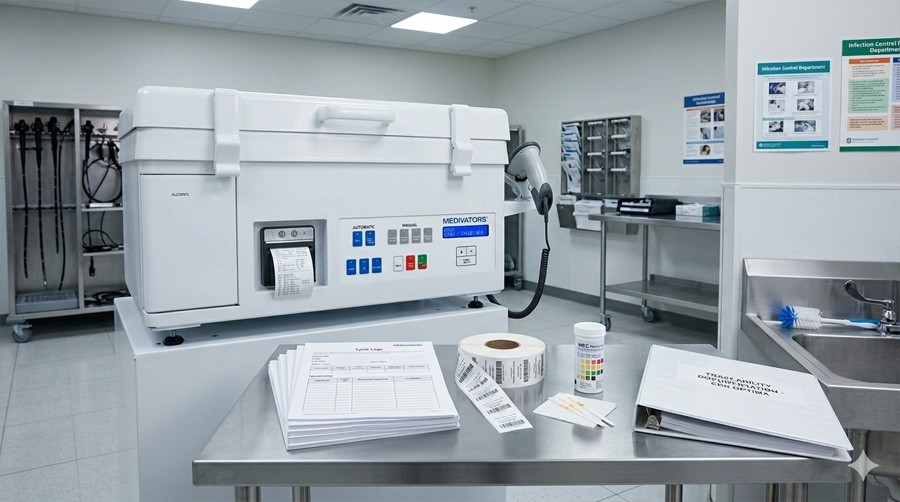
- Verification and documentation: Log the cycle data, confirm minimum effective concentration (MEC) of the disinfectant, and tie the record back to the individual undergoing the exam.
Following these steps in a consistent manner is the backbone of any solid endoscope reprocessing program. When every step in the chain gets done right—especially manual cleaning—the efficiencies show up fast: fewer failed cycles, quicker room turns, and less time troubleshooting.
AER Preventative Maintenance (PM) That Actually Works
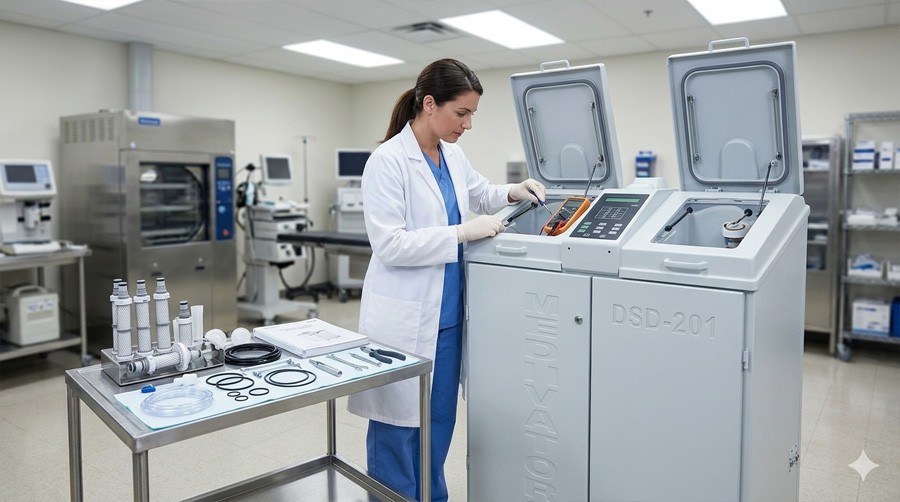
Facility teams that build a complete preventative maintenance (PM) schedule catch worn gaskets, clogged filters, and calibration drift before those small issues knock a machine offline during a packed case day. PM tasks typically include:
- Filter replacement on the recommended schedule
- Verification of detergent and disinfectant dispensing functions
- Inspection of door seals, basin gaskets, and drain lines
- Electrical ground checks and water-quality testing
- Software and firmware updates per the manufacturer
Olympus, Medivators, and Cantel each publish specific PM intervals. Stock OEM-compatible materials and accessories so a worn gasket or clogged filter does not sideline a machine during peak case volume.
When a unit does fail, fast turnaround matters. MedService Repair specializes in AER repairs—from board-level
endoscope repairs to complete rebuilds—and carries refurbished units for facilities that need a backup or replacement quickly. Their technicians work across Olympus, Medivators, and Cantel platforms, which simplifies vendor management for multi-brand endoscopy departments.
Endoscope Repairs and Endoscope Service Partnerships
Not every breakdown requires a factory return. A good third-party shop will handle board-level repairs, swap sensors, and rebuild basins for significantly less than the OEM charges—and in most cases, your unit ships back faster because it is not sitting in a factory queue. A dedicated AER service partner like MedService Repair keeps your reprocessing line moving by stocking common parts and dispatching field technicians who know the equipment cold. That kind of responsive repair relationship is especially valuable for multi-site programs managing dozens of endoscopes and AERs across locations. Operational efficiencies improve when your repair partner already understands your fleet. Enter your text here ...
Infection Prevention, Compliance, and FDA Expectations
The FDA treats AERs as Class II medical devices cleared under 510(k). That means your facility must follow the manufacturer's IFU—no shortcuts, no "we've always done it this way." The FDA also expects:
- Documented training for every staff member who touches the AER or the scopes
- MEC testing of the high-level disinfectants before or during each cycle
- A traceable record linking each device to the person receiving care, the operator, and the reprocessing cycle data
- Adverse-event reporting when a device malfunction may have affected patient safety
Falling out of compliance invites survey findings, infection prevention concerns, and—worst case—harm to people in your care. Staying current on FDA guidelines, AAMI ST91, and SGNA practices is not optional.
Liquid Chemical Sterilization and High Level Disinfectants
Not every scope requires sterilization; most GI endoscopes need high level disinfection at minimum. The distinction matters for endoscope reprocessing workflow and chemical selection. Liquid chemical sterilization is reserved for critical devices or when the manufacturer's IFU calls for it. Ortho-phthalaldehyde (OPA), peracetic acid, and glutaraldehyde are common liquid chemical agents; each has a defined soak time, MEC threshold, and shelf life. Your reprocessing procedures should specify which agent is approved for each scope model and confirm that the AER is validated for that chemistry.
Training, Certification, and Staff Development
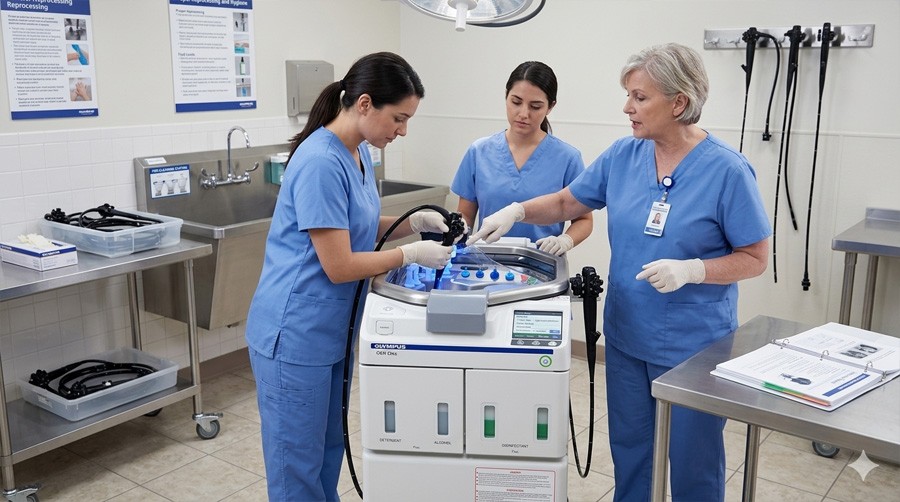
Competent reprocessing starts with training. Every person who handles flexible endoscopes—from the endoscopy tech to the supervisor—needs documented training on the specific AER models and scope types in your facility. What works in practices we have seen:
- Pair new hires with an experienced tech for hands-on orientation; have a supervisor sign off before they work independently.
- Run competency check-offs at least once a year, walking through every reprocessing step with the actual equipment on your floor.
- Any time a new AER model or new endoscopes show up, schedule dedicated training before that gear enters the rotation.
Understanding which credentials your state or accreditor expects gives department leaders a head start on targeting knowledge gaps, building skills on the floor, and keeping the team audit-ready.
How to Navigate the Certification Exam and Exam Application Process
For staff seeking formal credentials, the certification exam offered by HSPA (the CRCST certification track) and the certification exam pathways through SGNA give gastroenterology nurses and sterile processing technicians a structured way to demonstrate proficiency. The exam application process varies by organization, but candidates generally need documented training hours, a supervisor endorsement, and a passing score on the exam. Additional candidates from allied health backgrounds may also qualify with equivalent cleaning and reprocessing experience. Study resources—including practice exam prep materials and online modules—are available through both associations. Programs developed around these credentialing tracks produce measurable gains in endoscope reprocessing completion rates.
Choosing the Right AER for Your Facility
- Endoscope compatibility: Confirm the unit is validated for your flexible endoscope inventory—duodenoscopes, bronchoscopes, and specialty endoscopes each have unique channel configurations.
- Throughput: Match cycle time and basin count to your daily case volume and available processing windows.
- Chemical compatibility: Verify the AER works with your preferred liquid chemical disinfectant.
- Tracking integration: Modern units from Olympus and Cantel offer scope-tracking software that feeds directly into your endoscope reprocessing documentation system.
- Support and parts availability: Ask about resources for OEM and compatible accessories, support response times, and field technician coverage in your range.
Serving Hospitals and Ambulatory Surgery Centers
MedService Repair offers refurbished AERs from Olympus, Medivators, and Cantel—each unit tested, calibrated, and backed by a warranty. That gives medical offices and surgery centers a cost-effective path to expand capacity or replace aging equipment without a full capital outlay. Ambulatory surgery centers in particular benefit from right-sized AER configurations that match lower daily case volumes while still meeting every cleaning requirement for safe reprocessing.
FAQs - ENDOSCOPE REPROCESSORS
How often should an AER receive preventative maintenance?
Most manufacturers recommend PM at least annually, though high-volume endoscopy sites may benefit from semi-annual maintenance. Check the IFU for your specific model and keep a documented schedule.
Can I use third-party parts and chemicals in my AER?
FDA guidelines require that all materials used in endoscope reprocessing be compatible with both the AER and the endoscopes being processed. OEM-equivalent parts that meet manufacturer specs are acceptable; always verify compatibility before implementation.
What records do I need to keep for each reprocessing cycle?
At minimum, log the scope identifier, individual identifier, operator, cycle parameters, MEC verification result, and any deviations. These records support infection prevention audits and adverse-event investigations.
MedService Repair stocks refurbished automated endoscope reprocessors and OEM-compatible parts for Olympus, Medivators, and Cantel systems. Visit MedServiceRepair.com or call their support team for current availability and payment options.
Take the Next Step
Whether you need a PM kit, a board repair, or a fully refurbished AER, MedService Repair's technicians are ready to keep your endoscope reprocessing equipment running across hospitals nationwide. Reach out for a free equipment consultation—no essential detail is too small when reprocessing endoscopes safely is the goal.