Wondering how hospitals choose a medical detergent with enzymes for surgical instruments, flexible devices, and other medical equipment?
Choosing the right enzymatic detergent matters more than you might think. It's not just about placing an order—it affects how well things get cleaned, how smoothly your workflow runs, and at the end of the day, patient safety. Sterile processing departments don't have the luxury of focusing on just one thing. They're dealing with speed, consistency, and regulatory compliance all at once, every shift. What detergent do you go with early on? That decision ripples through everything else.
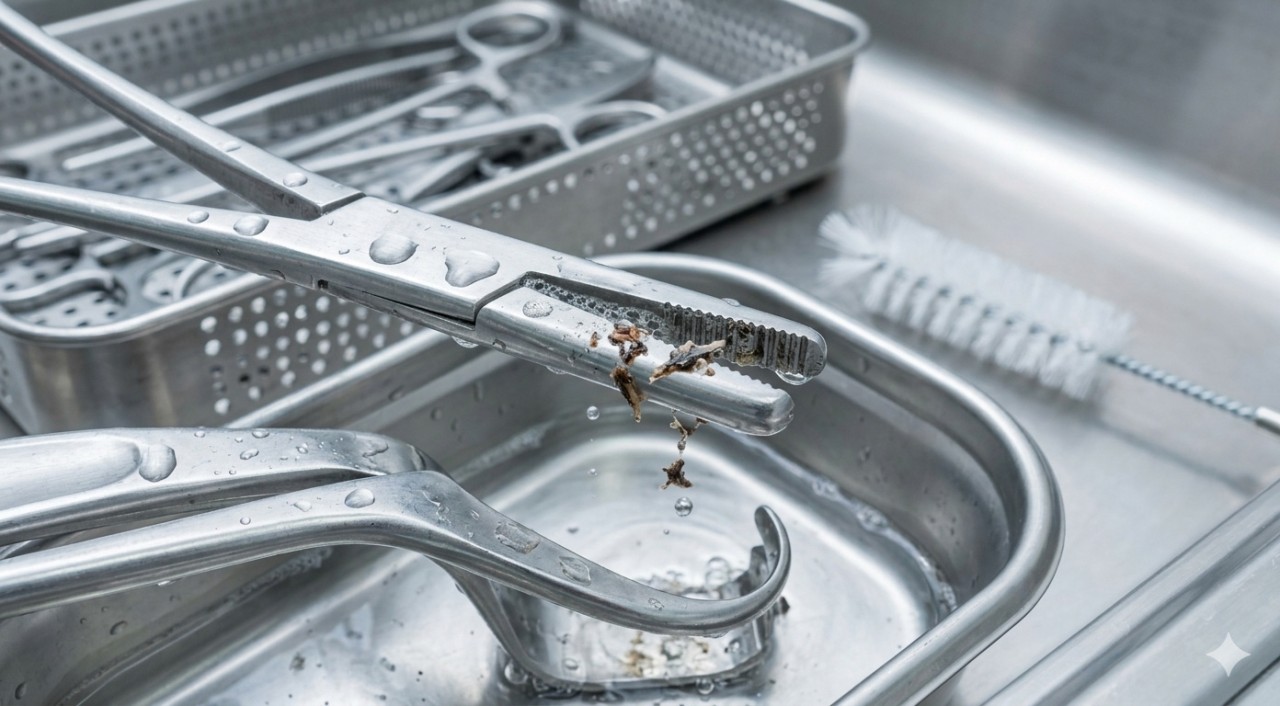
An enzymatic detergent needs to effectively remove organic soil without harming materials or creating rework situations. Residue left behind on any instrument can block disinfection or sterilization efforts. Too harsh a formula? You're looking at shortened device lifespans and higher replacement costs down the line.
This guide breaks down how to evaluate an enzymatic detergent, what actually drives daily workflow performance, and how to pick a product that works for your department in real conditions—not just on spec sheets.
View available products: Enzymatic Detergent Category
What Makes an Enzymatic Detergent Different
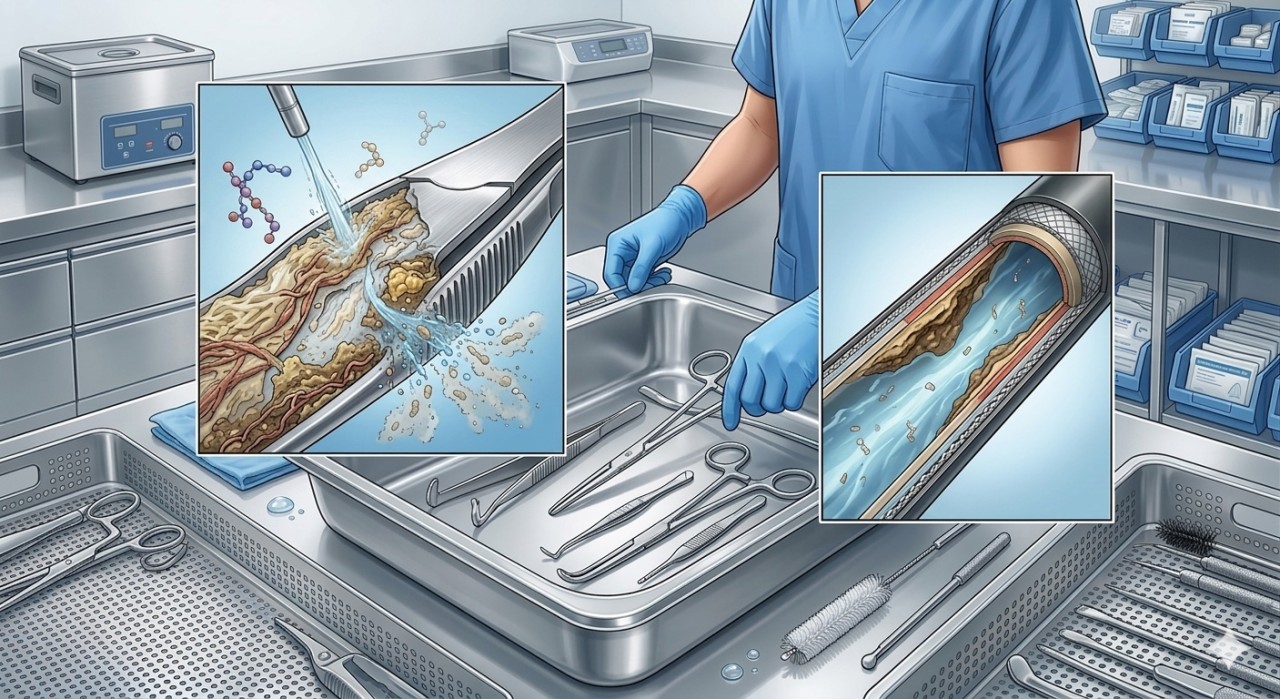
Enzymes don't just sit on the surface. They focus on specific chemical bonds in organic buildup and start breaking it apart at the chemical level through a process known as hydrolysis, which makes it much easier to remove during rinsing.
Enzymatic detergents are formulated for cleaning instruments by breaking down organic residue into smaller particles that can be rinsed away. Unlike standard cleaning solutions, these formulas are purpose-built for healthcare settings where consistency can't be optional.
- Uses biological catalysts to break down complex organic matter
- Dissolves residues into smaller, water-soluble fragments
Enzymes work differently than surfactants do on their own. The formula actively breaks apart organic material at a microscopic level—we're talking proteins, fats, and residues commonly found after procedures.
Why does this matter in actual workflows? Manual effort has limits. Staff can follow perfect technique and still miss hard-to-reach areas. An enzymatic detergent supports the process by loosening debris before it becomes problematic later.
Why Enzymatic Detergent Selection Matters
Not all detergents hold up under real-world pressure. Departments processing high volumes of surgical instruments can't afford unreliable results—they need performance across every load, not just under ideal conditions.
Here's what happens when blood and organic residue doesn't come off completely: you're looking at rework. It triggers repeat processing, lengthening turnaround and cutting efficiency. Those delays compound, affecting schedules, staffing, and overall throughput—sometimes in ways that don't show up until later in the week.
The right enzymatic detergent brings standardization. It minimizes variability between technicians, between shifts, and during workload spikes. Most departments aren't trying to be perfect. What they're after is consistent, predictable results every time they run a load.
Then there's the issue of protecting other medical devices that don't respond well to harsh or repeated chemical exposure. A balanced formula maintains performance without wearing down delicate components over the long haul.
Comparing Neutral pH, Water, and Contact Factors
Three practical factors drive daily use performance more than anything else.
Neutral pH
A neutral pH formulation tends to be gentler on surfaces while delivering effective cleaning. This matters when processing mixed trays containing different materials.
Water Quality
Water conditions affect performance more than you'd expect. Hardness and mineral content vary, and these variations influence detergent effectiveness. Maintaining consistent water quality produces predictable outcomes across loads.
Contact Conditions
How long the solution is exposed to the surface matters more than most people realize. Try to rush it or cut the cycle short, and you'll see performance drop off. Sticking to the manufacturer's guidance gives the detergent the time it actually needs to do its job.
Operating Temperature
High heat isn't always the answer. Enzymes are usually most effective at lower temperatures, typically between 90°F and 130°F. This specific range makes them a great choice for cleaning heat-sensitive instruments like flexible devices that could be damaged by extreme thermal conditions.
How Enzymatic Detergent Breaks Down Soil
Enzymatic detergents tackle multiple residue types simultaneously. Each enzyme targets a specific category, which is how the formula gets broader coverage across different soil types.
Proteases go after proteins—the kind you find in biological material like blood or tissue. Lipases break down fatty residue left behind from procedures, especially those involving fatty tissue like orthopedic surgery. These enzymes focus on oils and lipids that standard surfactants might struggle with on their own, ensuring that even the slickest residues are effectively loosened from the instrument surfaces. This is one of the main reasons enzymatic formulas are used so widely in healthcare settings. Without that step, protein-based residue can cling to surfaces and become much harder to remove later in the process.
The result? A more thorough removal process. Rather than relying solely on mechanical action, the detergent lifts debris from surfaces and internal channels.
This becomes especially important for surgical instruments with intricate designs. Hinges, joints, narrow spaces—these trap residue when not addressed early.
- Penetrates complex geometries and internal channels
- Reaches areas where mechanical scrubbing is difficult
- Targets multiple soil types like blood, fats, and carbohydrates
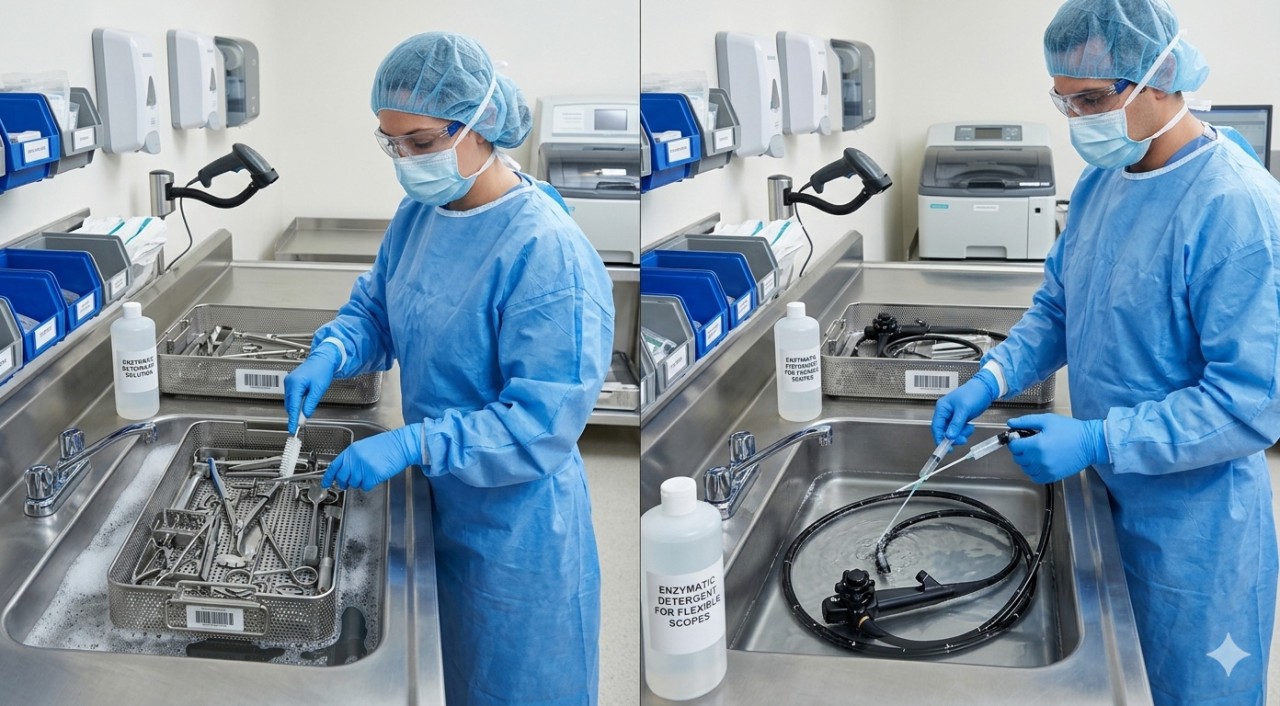
Choosing Enzymatic Detergent for Surgical Instruments and Flexible Devices
What matters most when you're picking a product isn't what the spec sheet says—it's how it actually performs when you're in the middle of a shift.
Surgical instruments and flexible devices each come with their own set of challenges. Some need aggressive soil removal to get the job done. Others are more delicate and need a gentler approach to avoid material damage. A quality enzymatic detergent finds the middle ground between those two extremes.
Look for these characteristics:
- Reliable performance across different medical instrument types
- Clean rinsing that leaves no residue
- Amylase inclusion to target starches in organic residue
- Compatibility with delicate components and instruments
- Simple preparation and repeatable results
- Multi-enzymatic action to remove blood, proteins, and fats
- Non-abrasive and non-corrosive on metal, plastic, or rubber
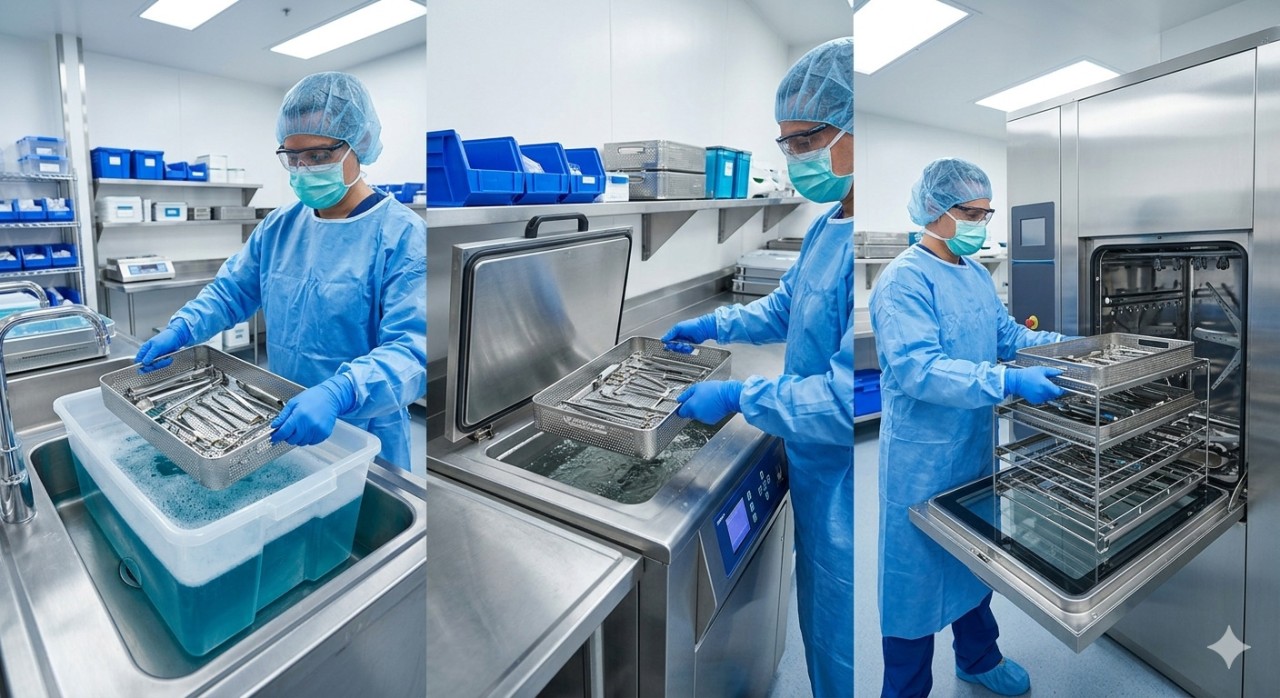
- Versatile fit for ultrasonic units and washer decontaminators
Products such as Endocept and Endozime Bio-Clean get chosen when departments need dependable results across varied scenarios.
What matters in practice isn't just whether it works—it's whether it works consistently, shift after shift.
Using Enzymatic Detergent in Cleaning Equipment
An enzymatic detergent should work smoothly into existing workflows. It shouldn't be necessary to continually be making adjustments.
To maximize effectiveness, keep these factors in mind:
- High pureness of water used for dilution
- Adequate contact time based on soil level
- Consistent neutral pH for material safety
Most departments use a mix of manual and automated processes—soaking, ultrasonic systems, and washer units. Whatever detergent you pick needs to hold up at every one of those steps, not just some of them.
Here's something that doesn't always get enough attention: low-foaming behavior. In automated cleaning equipment, foam is a problem. Too much of it throws off how the system runs and creates inconsistencies you don't want to deal with later.
Products like
Medizyme and
EmPower Dual-Enzymatic Detergent get selected for their versatility across multiple types of equipment, eliminating the need for separate solutions.
- Specialized healthcare formulation for manual or automated use
- Compatible with ultrasonic systems and washer units
- Safe for aluminum, zinc, and other delicate medical metals
- Phosphate-free to protect sensitive equipment inventory
That kind of flexibility simplifies inventory management and reduces training overhead.
At the end of the day, getting consistent cleaning results across workflows comes down to one thing: sticking with the same detergent strategy from start to finish.
What Size and How Many Gallons of Enzymatic Detergent to Order?
Once you know the product performs the way you need it to, the next question is what size makes the most sense. How you buy it affects storage space, how easy it is to prep, and how often you're placing orders. The most common concentrated sizes of detergent are 1-gallon (3.8L) containers and 5-gallon (19L) containers. That said, bulk containers are available as well—15-gallon, 30-gallon, and 55-gallon drums if your operation runs through enough volume to justify them.
Many facilities stick with gallon containers—they're straightforward to store and measure. A single gallon supports multiple cycles depending on dilution ratios.
If you're running a higher-volume department, multi-gallon cases tend to make more sense. You're not placing orders as often, and you've got a steady supply on hand even when things get busy.
There's also the tablet format to consider. Products like
Efferzyme Cleaning Tablets take some of the guesswork out of prep and help reduce the differences you see from one staff member to another.
When evaluating options, teams typically weigh the following:
- Ordering frequency
- Available storage space
- Daily processing volume
- Staff ease of use
There's no universal "best" size format—it depends on your workflow and scale.
In high-volume settings the right quantity, one gallon or more, supply choice helps maintain consistent cleaning performance across every shift.
FAQ (Frequently Asked Questions)
Are detergents with enzymes safe for all equipment?
Most modern formulas offer impressive compatibility across a wide spectrum of tools. However, checking specific material instructions first is a critical step you shouldn't skip to ensure long-term equipment health.
Getting the water-to-concentrate ratio just right.
You really need to stick to the exact mixing measurements provided. It's the simplest way to prevent performance drops and keep your cleaning results consistent from one technician to the next.
How long do these instruments actually need to soak?
Don't guess on timing. We recommend keeping the manufacturer's technical data sheet nearby; it's the best resource for hitting the required exposure markers without causing unnecessary delays in your workflow.
Choosing a gallon format: Is it the right call for us?
It usually comes down to how much volume you're moving through each day and how much shelf space you have available. For a lot of busy sterile processing departments, the gallon size ends up being the most practical way to handle high-frequency needs.
Final Perspectives
A reliable medical detergent that contains enzymes does more than just clean—it sets the baseline for how well surgical instruments and other medical devices are prepared for reprocessing. When the right formula is part of the plan, you aren't just meeting standards—you're actively protecting your inventory and helping your reprocessing team stay on schedule.
If you're ready to compare formulations or restock your supply, take a closer look at our full enzymatic detergent selection.